VapoCept vs Prevagen: What’s Actually Different?
One ingredient vs six. Different formulas, different evidence, and very different approaches to brain health support.
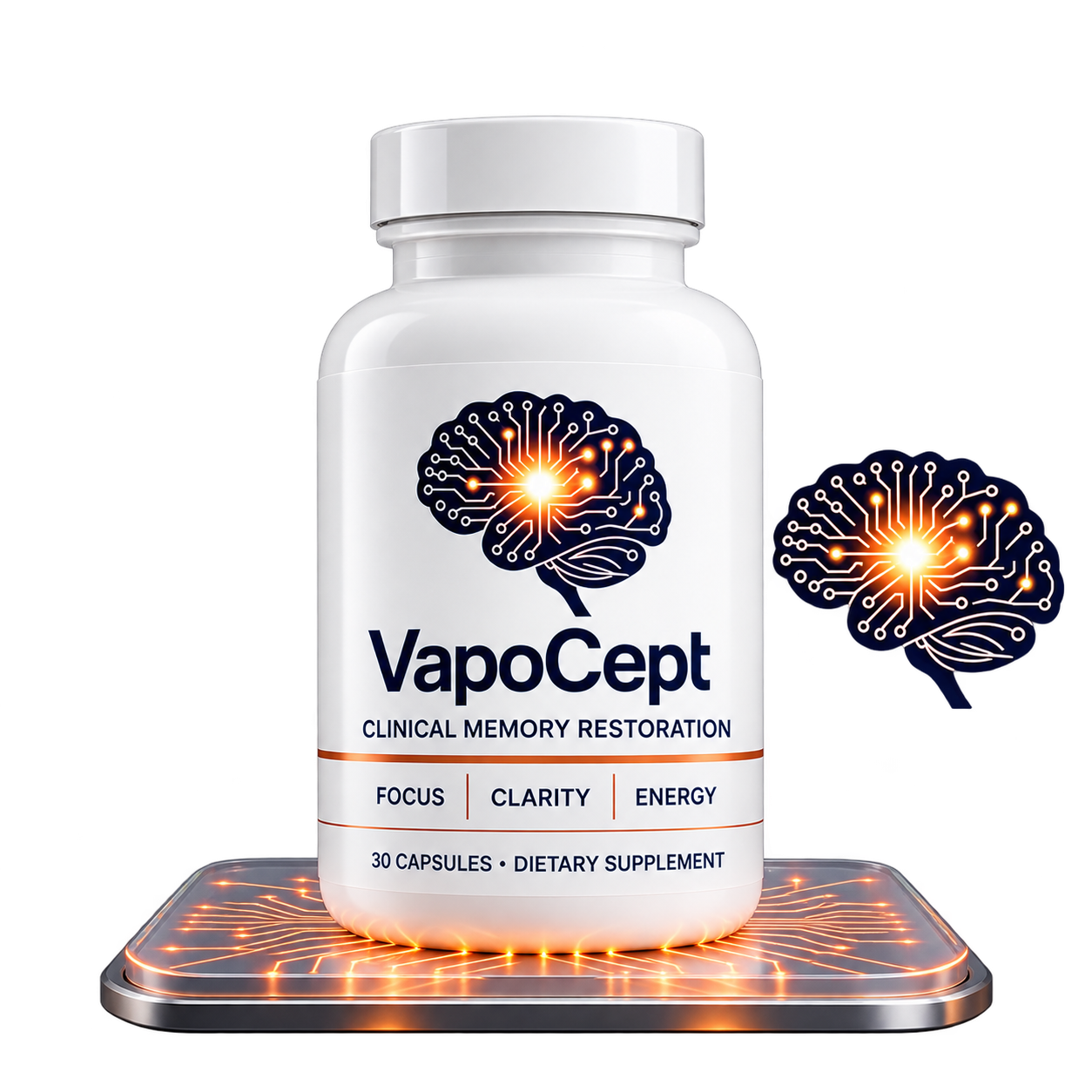
VapoCept and Prevagen are both marketed as daily brain health supplements. Both are caffeine-free. Both are sold without a prescription. And both show up when you search for a supplement to support memory and cognitive function as you age.
But these two products take fundamentally different approaches to formula design. Prevagen is built around a single active ingredient — apoaequorin, a protein originally derived from jellyfish. VapoCept combines six individually disclosed ingredients. The differences extend to dosing transparency, available research, regulatory history, and how each product reaches the consumer.
We researched both products using manufacturer websites, court records, published studies, and publicly available product data. Here’s how they actually compare.
Quick Verdict: Prevagen is the more established product — it has been on the market longer, has wide retail distribution across 60,000+ stores, and has direct finished-product research (though its primary clinical study’s marketing claims were the subject of a federal court order in 2024). VapoCept takes a different approach: six ingredients with individually disclosed doses, no proprietary blend, and a formula designed around label transparency. If you prefer a single-ingredient approach with broad retail availability, Prevagen has that profile. If you want a multi-ingredient formula where every dose is individually stated, VapoCept fits that description.
1. Ingredients & Formula Design
The most immediate difference between these two products is their formula philosophy.
Prevagen
Prevagen is built around a single active ingredient: apoaequorin, a calcium-binding protein originally discovered in the bioluminescent jellyfish Aequorea victoria. The version used in Prevagen is produced through laboratory synthesis. Prevagen also includes Vitamin D (50 mcg).
The product is available in multiple versions:
| Version | Apoaequorin | Vitamin D |
|---|---|---|
| Regular Strength | 10 mg | 50 mcg |
| Extra Strength | 20 mg | 50 mcg |
| Professional Formula | 40 mg | 50 mcg |
This is a focused, single-ingredient approach. There is no proprietary blend, but there is also only one active ingredient to evaluate.
VapoCept
VapoCept uses six individually disclosed ingredients, each with its exact dose listed on the label:
- Ginkgo Biloba Extract (4:1)100 mg
- D-Glucosamine250 mg
- Turmeric Extract (30:1)50 mg
- Marigold Extract / Lutein (5%)25 mg
- Green Tea Extract / EGCG (98% polyphenols)15 mg
- Bamboo Extract / Silica (70%)5 mg
No proprietary blends. No undisclosed ratios. One capsule per day. You can look up each ingredient individually and compare the dose against published literature. See the full ingredient breakdown →
What This Means for the Buyer
Prevagen offers simplicity: one active ingredient, multiple strength options, a long commercial history. VapoCept offers a broader formula with full dose transparency across six ingredients. Neither approach is inherently superior — but they serve different buyer priorities. If you prefer evaluating a single well-known ingredient, Prevagen keeps it simple. If you want to see every ingredient and dose before deciding, VapoCept provides that.
2. Research & Regulatory History
Both products exist in a category where evidence claims are closely scrutinized. Here’s what the record shows for each.
Prevagen: The Madison Memory Study
Prevagen’s primary published research is the Madison Memory Study — a randomized, double-blind, placebo-controlled trial involving 218 participants (ages 40–91) with self-reported memory concerns, conducted over 90 days. The study was funded by Quincy Bioscience, Prevagen’s manufacturer.
The study’s primary analysis did not find a statistically significant difference between apoaequorin and placebo across the full study population. Positive results were reported in certain subgroups through post hoc analyses — secondary analyses conducted after the data was collected. According to court records, the researchers conducted approximately 30 post hoc analyses and reported three favorable results. Post hoc findings can identify patterns worth further study, but they carry less evidentiary weight than pre-specified primary endpoints.
This distinction became central to the regulatory proceedings that followed.
The FTC Case (2017–2024)
In January 2017, the Federal Trade Commission and the New York Attorney General filed a lawsuit against Quincy Bioscience, alleging that Prevagen’s marketing claims were not adequately supported by scientific evidence.
Eight specific marketing statements were challenged in the case. These included claims that Prevagen improves memory, that it is “clinically shown” to reduce memory problems associated with aging, and related cognitive benefit assertions.
The case went to a jury trial. The jury’s findings:
| Finding | Detail |
|---|---|
| Claims evaluated | Eight marketing statements about Prevagen’s cognitive benefits |
| Scientific support | The jury concluded that the scientific support for all eight claims was insufficient |
| Materially misleading (NY law) | Two of the eight claims were found materially misleading under New York consumer protection law |
| Deceptive tendency | The court found that all eight claims had “a tendency to deceive” consumers |
| FTC Act | The court concluded that the defendants violated the FTC Act’s prohibition on deceptive advertising |
In December 2024, the court issued a nationwide injunction prohibiting Quincy Bioscience from using any of the eight challenged marketing claims. The court did not impose monetary penalties, reasoning that the loss of years of marketing investment represented substantial consequences. The order took effect immediately. The defendants have appealed the judgment.
This history does not mean Prevagen is unsafe or that apoaequorin has no biological activity. It means that the specific marketing claims the company used to promote the product were found, through a federal court proceeding, to lack adequate scientific substantiation.
VapoCept: Ingredient-Level Evidence
VapoCept does not have a published clinical trial of its finished product. This is a real limitation, and we will not frame it otherwise.
What VapoCept does have is a formula built on individually researched ingredients. Ginkgo Biloba is one of the most extensively studied botanicals for cerebral blood flow and cognitive function, with a substantial body of published peer-reviewed research. Turmeric extract (curcumin) has a large body of research on anti-inflammatory and antioxidant properties. EGCG from green tea has documented antioxidant activity in published studies.
However, research on individual ingredients is not the same as clinical evidence on the finished product. The presence of researched ingredients does not prove that VapoCept as a complete formula delivers a specific result. This distinction applies to VapoCept just as the distinction between post hoc subgroup findings and primary endpoint results applied to Prevagen’s study.
Both products face evidence limitations — they simply face different ones.
3. Safety & Side Effects
Both VapoCept and Prevagen are caffeine-free supplements available without a prescription. Neither requires a medical evaluation to purchase. That said, any supplement should be evaluated in the context of your individual health situation.
Prevagen
Prevagen’s manufacturer states that three peer-reviewed safety studies have been conducted. The product has also earned NSF Contents Certified certification. The manufacturer recommends speaking with a doctor if you have concerns about side effects.
VapoCept
VapoCept’s six ingredients are individually listed with their doses, which allows a healthcare provider to evaluate the formula in full. The product is described as free from gluten, dairy, soy, yeast, peanuts, artificial preservatives, and synthetic coloring. It is caffeine-free and stimulant-free.
One ingredient-specific consideration: Ginkgo Biloba may affect blood coagulation. If you currently take anticoagulant or antiplatelet medications (such as warfarin, aspirin, or clopidogrel), you should consult a healthcare professional before using any supplement containing Ginkgo. For other medications or health conditions, professional guidance may be appropriate depending on your individual situation. Read our full VapoCept side effects overview →
General Guidance
Neither product should be treated as a substitute for medical advice. If you take prescription medications or have a health condition, consult a healthcare professional before adding any supplement to your routine.
4. Who Each Product May Suit
This isn’t about declaring a winner. It’s about which approach matches what you’re actually looking for.
Prevagen may fit you if you:
- Prefer a single-ingredient approach to brain health supplementation
- Value a product with a longer commercial track record and broad brand recognition
- Want wide retail availability — pharmacies, grocery chains, and online retailers nationwide
- Prefer a product with direct finished-product research (noting the limitations identified in the 2024 court proceedings)
- Want the simplicity of one active ingredient at different strength levels
VapoCept may fit you if you:
- Want individually disclosed ingredient doses with no proprietary blends
- Prefer a multi-ingredient formula you can fully evaluate on your own
- Want a caffeine-free, stimulant-free approach with a one-capsule daily routine
- Value a 60-day money-back guarantee that starts from your delivery date, subject to the applicable guarantee terms
- Prefer a formula built on individually researched botanical and plant-based ingredients
5. VapoCept vs Prevagen: What Actually Matters
Most supplement comparisons get lost in ingredient lists without connecting them to real buying decisions. Here’s what actually separates these two products:
If a single-ingredient formula with a long market presence matters most, Prevagen has that profile. It has been commercially available for over a decade, is stocked in major retail chains nationwide, and is built around one well-known active ingredient. It also has a finished-product study — though the marketing claims derived from that study were prohibited by a 2024 federal court order after the jury found their scientific support insufficient.
If formula transparency is your deciding factor, VapoCept offers a structurally different label. Six ingredients, six exact doses, no proprietary blends. You can look up every ingredient, compare it against published research at the stated dose, and make your own informed assessment.
If you want to evaluate the formula independently, VapoCept’s fully disclosed doses make that straightforward. Prevagen’s single-ingredient approach is also transparent in terms of what’s included — there’s no hidden blend — but the evidence question around apoaequorin’s cognitive benefits remains unresolved after the court proceedings.
Both products are caffeine-free. Both target daily brain health support. The decision comes down to what you value more: a long-established single-ingredient product with broad retail availability, or a multi-ingredient formula with full dose transparency and a clearly defined evaluation window.
6. Final Verdict
If your priority is a long-established product with direct finished-product research, broad retail availability, and a simple one-ingredient formula, Prevagen has that profile. It has been on the market for over a decade, is available in 60,000+ stores, and offers multiple strength options. Buyers should be aware that the specific marketing claims based on its clinical study were the subject of a 2024 federal court order.
If your priority is a multi-ingredient formula with individually disclosed doses, no proprietary blend, and a clearly defined 60-day evaluation window, VapoCept fits that profile. Its formula is built on individually researched ingredients, every dose is stated on the label, and its guarantee starts from the date you receive the product, subject to the applicable guarantee terms.
For buyers who value formula transparency, dose-level disclosure, and a defined evaluation period, VapoCept is worth a closer look.
Frequently Asked Questions
In January 2017, the Federal Trade Commission and the New York Attorney General filed a lawsuit against Quincy Bioscience, Prevagen’s manufacturer, challenging eight marketing claims about the product’s cognitive benefits. The case went to a jury trial. The jury found that the scientific support for all eight challenged claims was insufficient. Two of the eight were found materially misleading under New York consumer protection law. The court concluded that the defendants violated the FTC Act and, in December 2024, issued a nationwide injunction prohibiting the use of all eight challenged claims. No monetary penalties were imposed.
Prevagen has a published clinical trial — the Madison Memory Study, a 90-day randomized, double-blind, placebo-controlled study of 218 participants. However, the study’s primary analysis did not find a statistically significant difference between apoaequorin and placebo across the full study population. Positive results were reported through post hoc subgroup analyses. A federal court found in 2024 that the marketing claims derived from this study lacked adequate scientific substantiation and prohibited their use. Prevagen has finished-product research, but characterizing it as “clinically proven” is not supported by the court’s findings.
Ginkgo Biloba has a substantially larger body of published peer-reviewed research than apoaequorin. It is one of the most extensively studied botanicals for cerebral blood flow and cognitive function, with decades of published studies. Apoaequorin has a more limited research base, and the Merck Manual notes that there are currently no high-quality studies demonstrating its effectiveness for memory improvement. However, ingredient-level research on Ginkgo does not prove that VapoCept as a finished product delivers a specific result — just as Prevagen’s finished-product study faced its own evidentiary limitations.
Yes. Both VapoCept and Prevagen are caffeine-free supplements. VapoCept is also described as stimulant-free. Neither product relies on caffeine or traditional stimulants for its effects.
These are different supplements with different ingredients, so switching is a personal decision rather than a direct substitution. If you are considering changing supplements, it may be worth consulting a healthcare professional — particularly if you take other medications. VapoCept offers a 60-day money-back guarantee from the delivery date (subject to the applicable guarantee terms), which provides a defined evaluation window if you want to try it.
Continue Your Research
*These statements have not been evaluated by the Food and Drug Administration. The products discussed on this page are not intended to diagnose, treat, cure, or prevent any disease. Individual results may vary. Consult a healthcare professional before starting any supplement.